Crashes & Collisions
Hard contact with another vessel, a dock, a piling, or a submerged object. Carriers will scrutinize whether the impact was a single sudden event or a series of smaller incidents. The framing matters.
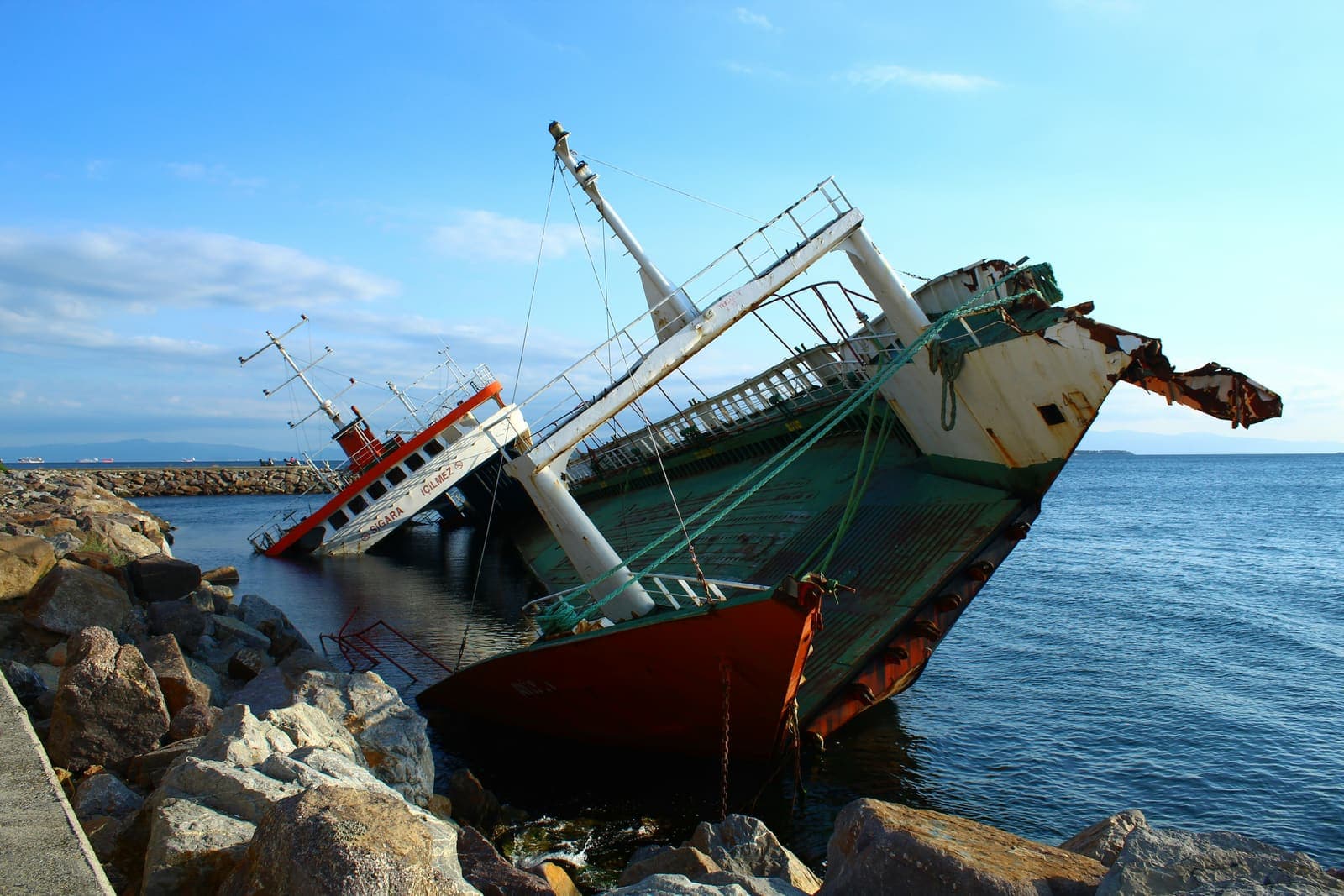
In Southeast Florida, the boat capital of the world, we are seeing more marine claims, and a troubling pattern of denials. How you present a crash, sinking, or grounding from the very first call matters enormously.
Living and working in Southeast Florida, the boat capital of the world, we have been seeing more and more insureds with claims on their boats coming through our door. We’ve also been noticing a trend of these claims being denied for various reasons.
In conversations with boat mechanics and repair shop owners, this has become a real problem, one that doesn’t show up in any single carrier’s policy but in the way marine claims are being handled across the market.
If you have a boat claim, whether it is from a crash, taking on water, sinking, or grounding, be very careful how you present it from the onset. Keep in mind that, in order for a claim to be covered, it does need to be sudden and accidental.
If you have, or have had, a boat claim, give us a call before you make another statement to the carrier. The first conversation often shapes everything that comes after it.
Marine policies, almost without exception, cover losses that are sudden and accidental. Everything else is on the table for the carrier to exclude, wear and tear, gradual deterioration, manufacturer defect, operator negligence, lack of maintenance.
The same set of facts can read as covered or excluded depending entirely on how the cause of loss is described. A licensed public adjuster knows which words trigger which exclusions, and which framing keeps the claim inside the coverage line.
Same boat, two outcomes
Covered
“A through-hull fitting failed suddenly while the vessel was at the dock, the boat took on water and sank.” Reads as sudden and accidental.
Denied
“The hose had been leaking for a while and finally gave out.” Reads as wear and tear, the carrier’s first-choice exclusion.
50+
Five-star certified reviews
0%
Fee if there is no recovery
100%
Florida licensed & bonded
Most marine claims trace back to one of four event patterns. Each one carries its own carrier playbook, and its own opportunities for a denial to be reversed or a low offer to be rebuilt.
Hard contact with another vessel, a dock, a piling, or a submerged object. Carriers will scrutinize whether the impact was a single sudden event or a series of smaller incidents. The framing matters.
Through-hull failures, hose failures, stuffing-box leaks, blown gaskets. The cause of the ingress determines whether the loss reads as sudden and accidental, or as wear and tear the carrier can exclude.
Whether at the dock or underway, a sinking generates layered damage, hull, engines, electronics, upholstery, fuel and oil contamination. Documentation has to capture all of it before salvage and drying begin.
Hull damage, running gear, shafts, props, rudders, and the often-overlooked stress damage to keel and stringers. A grounding claim is rarely as simple as the visible scrape.
No two boats are alike, but marine claims tend to break along the same fault lines. Knowing where the arguments will land, and getting ahead of them, is the difference between a paid claim and a denied one.
Marine policies cover losses that are sudden and accidental. The cause of loss has to be presented in a way that fits that standard from the very first conversation with the carrier, or it can quietly become a denial.
Carriers default to wear, tear, and gradual deterioration as a reason to deny. If a failure had any prior history, the burden flips to you to show what was actually sudden.
A poorly worded incident description can read as operator error, which most policies treat very differently than an accidental loss. The same facts can support either reading, depending on how they are told.
Tow bills, environmental remediation, and wreck removal are separate coverages with their own limits and triggers. They are often the largest line items on the claim, and the first ones carriers underpay.
The carrier’s surveyor and your repair yard will often disagree on scope and cost. We translate between them, and push the file toward a scope that actually returns the boat to pre-loss condition.
Tenders, electronics, fishing gear, safety equipment, contents. These are usually under a separate sub-limit and almost always require a documented inventory to be paid in full.
Safety first, paperwork second
Get crew and passengers to shore, notify the Coast Guard or local authorities when required, and only return to the vessel when it’s safe.
Mitigate further damage
Arrange a tow, pump, or salvage as needed. Your policy requires reasonable protective steps. Keep every receipt.
Document before remediation
Photograph the vessel, the damage, the water line, the wreckage, all of it, before anything is moved, dried, or repaired. This is evidence the carrier’s surveyor will ask for.
Call us before you call the carrier
The first conversation with the carrier shapes the claim. We help you describe the event in language that fits the policy’s coverage standard.
Step 01
We read your marine policy in full, identify every coverage that applies, and frame the loss in language that fits the sudden-and-accidental standard.
Step 02
We coordinate with surveyors, repair yards, and marine specialists to build a scope that returns the vessel to pre-loss condition, not the carrier’s shorter list.
Step 03
We negotiate hull, machinery, electronics, salvage, towing, and personal effects directly with the carrier. You handle the boat, we handle the file.
Trust Foremost PA
If you have, or have had, a boat claim, give us a call before you make another statement to the carrier. A short conversation today can change the trajectory of your claim.
Practical, plain-English how-to guides from our claim guides library.
Get Your Free Insurance Claim Review
A licensed adjuster responds within 2 hours. No recovery, no fee.