Hurricane Damage Claims in South Florida: How to Maximize Your Settlement
South Florida hurricanes destroy homes, and carriers use policy language to destroy claims. Here is the forensic meteorology, Florida Building Code enforcement, and structural engineering documentation we use to maximize hurricane settlements, and the traps that quietly gut a payout.
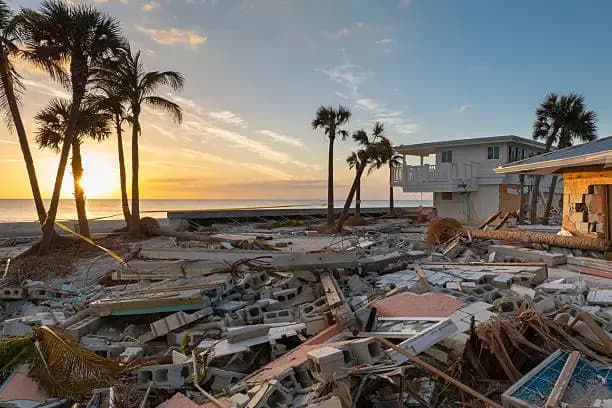
A Category 4 wind tears the roof off a South Florida home. The carrier blames worn shingles, denies the claim, and offers $3,000 for patches. The actual roof replacement costs $45,000. The homeowner who fights that battle alone almost always loses. That gap, between what the carrier offers and what the loss actually costs, is where this guide lives.
South Florida hurricanes destroy homes. Carriers use policy language to destroy claims. In this guide we lay out the exact forensic meteorology, Florida Building Code enforcement, and structural engineering documentation we use to maximize hurricane settlements, and the traps that quietly gut a payout before you ever realize they were set.
Wind vs. Flood: The Classification Trap That Kills Claims
A standard homeowners policy (HO-3) covers wind but excludes flood. The National Flood Insurance Program (NFIP) covers flood but excludes wind. Hurricanes bring both at once, and that overlap is a catastrophic legal intersection the carrier knows how to exploit.
Anti-Concurrent Causation (ACC) Clause
This is the carrier's favorite weapon. Under an Anti-Concurrent Causation clause, if a covered peril (wind) and an excluded peril (flood) occur concurrently, the entire claim can be denied. The carrier attributes all of the damage to storm surge, closes the file, and pays zero. ACC enforcement drives roughly 60% of South Florida coastal denials after a catastrophe.
Forensic Meteorology Defenses
We isolate the wind damage. We deploy meteorological engineers who analyze Doppler radar, NOAA data, and local anemometer readings to build a timeline reconstruction. The goal is to prove that wind breached the building envelope, blew off the roof, shattered windows, compromised soffits, hours before floodwaters rose. That forces the carrier to pay wind policy limits for interior damage regardless of subsequent flooding. Hydrological models cross-referenced with barometric pressure drops validate the chronological sequence of loss.
60%
Share of South Florida coastal claim denials after a catastrophe that rely on Anti-Concurrent Causation, the carrier blaming excluded storm surge for damage that wind actually caused.
The Florida Building Code 25% Roof Rule
Carriers love to patch a few localized shingles. Depending on the scope of the damage, that can be flatly improper, because a roof is a monolithic system, not a quilt of independent squares.
FBC Chapter 15 (Roof Assemblies)
Section 1511.1.1 is the rule that matters: if more than 25% of a roof section or plane is damaged, repaired, or replaced within a 12-month period, the entire roof section must be brought up to current code, which means full replacement. We document grid squares to mathematically trigger that 25% threshold, and we use drone orthomosaics to map the exact square footage of wind-creased tabs.
The Brittle Test (Repairability)
Asphalt shingles age. UV exposure bakes the oils out of them and they lose pliability. To patch one shingle, the shingle above it has to be lifted roughly 45 degrees to expose the nail, and a brittle, aged shingle snaps or creases when you do that. The carrier literally cannot repair the roof without causing new damage. We film standard brittle tests under ASTM protocols to prove un-repairability and force a full replacement.
Fastener Pull-Through & Wind Uplift
Wind creates negative pressure, suction, over the roof plane. It lifts shingles without tearing them off, pulling the shingle through the nail head and breaking the sealant bond. The roof looks intact from the ground but is structurally compromised, and the unsealed tabs flap in the next storm, letting water in. We deploy drones to document unsealed tab anomalies and verify bond failure with manual tactile inspection.
Understanding Florida Hurricane Deductibles
Your standard peril deductible ($1,000 or $2,500) does not apply to named storms. Hurricane deductibles are percentage-based, typically 2%, 5%, or 10% of your Coverage A dwelling limit. On a $500,000 dwelling limit with a 5% hurricane deductible, that is $25,000 out of pocket before the carrier pays a cent.
Calendar Year Application
Under Florida Statute 627.701, hurricane deductibles apply per calendar year, not per storm. If Hurricane A causes $15,000 in damage (absorbed by your $25,000 deductible) and Hurricane B hits two months later with $40,000 in damage, you only owe the remaining $10,000 of the annual deductible. The carrier is supposed to track this, and we audit carrier ledgers to prevent a double-deductible application.
Carrier Delay and Denial Tactics After Hurricanes
A catastrophe generates 100,000+ claims simultaneously. Carrier infrastructure buckles, and attrition warfare begins. The strategy is simple: delay, deny, defend. Here is how that plays out, and how we answer it.
- Post-loss underwriting. The carrier investigates your original policy application for errors only after a large claim is filed, hunting for a mismatched roof age or an unpermitted addition so it can void the policy retroactively. We litigate this as bad faith and demand the unredacted underwriting file.
- The independent adjuster carousel. An out-of-state IA writes an estimate, gets reassigned, a desk adjuster takes over, then a new field adjuster, five cycles deep. Every handoff resets the clock and the claim stalls for a year. We halt the carousel, escalate to executive examiners, and invoke statutory deadlines under Florida Statute 627.70131.
- Assignment of Benefits (AOB) traps. Predatory contractors canvass storm-hit neighborhoods pushing AOB contracts that transfer your legal rights to them. You lose control of the claim, the contractor inflates the bill, the carrier denies, and you can end up with a lien on your house. Do not sign an AOB. Hire a public adjuster to protect your rights and let a contractor simply build.
- Managed Repair Programs (MRP). The carrier triggers an MRP endorsement and sends a preferred vendor who cuts corners, uses substandard materials, and follows carrier directives instead of building codes. You can opt out in most scenarios, and we block MRP implementation wherever it is legally permissible.
Hidden Damage: Water Intrusion and Structural Stress
Category 3 and 4 hurricanes inflict invisible kinetic damage that a carrier's visual inspection routinely misses.
Wind-Driven Rain (WDR)
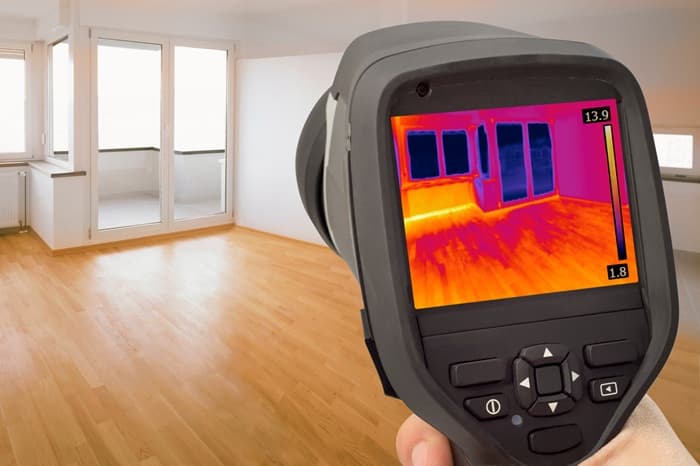
At 130 mph, wind atomizes water and forces it horizontally through masonry pores, stucco cracks, weep holes, and window gasket seals. The drywall looks intact while the wall cavity is saturated and breeding toxic mold. We deploy FLIR thermal imaging to map moisture plumes behind intact drywall, backed by penetrating and non-penetrating moisture meters.
Truss Uplift and Load Path Compromise
Aerodynamic lift pulls the roof structure upward, stressing hurricane straps and tie-downs. After the storm the roof settles back down and looks normal, but the nails have withdrawn and the straps are stretched. The continuous load path is broken. We measure truss-to-top-plate separation tolerances and document the structural failure, turning what looks like a cosmetic claim into a structural rebuild.
Fenestration Failure (Windows and Doors)
Impact windows withstand debris, but their frames warp under sustained positive and negative wind pressure. Gaskets fail, glazing beads crack, and the carrier ignores the frame torque. We test window operability and document micro-fissures in the impact glass lamination.
How Foremost PA Handles Hurricane Claims Differently
We bypass the desk adjuster's opinion and generate engineering-grade data the carrier cannot dispute, because it is physics, not argument.
- Drone mapping and 3D modeling. Automated flight paths produce high-resolution orthomosaic maps with AI-assisted damage detection, identifying hail impacts, wind creases, and missing granules. The 3D point cloud maps exact pitch, facet dimensions, and square footage, the raw material for the 25% rule.
- Demand surge pricing. After a hurricane, regional labor and material costs spike, plywood can triple, while the carrier tries to pay pre-storm baseline rates. We update Xactimate price lists daily and inject demand-surge modifiers to enforce actual market cost.
- Ordinance or Law enforcement. Standard policies replace "like for like," but the Florida Building Code mandates upgrades during repairs, ring-shank nails, secondary water barriers, impact glass. Ordinance or Law coverage pays for these mandatory upgrades, and carriers never volunteer it. We identify the triggered codes and force the payout.
- Xactimate precision estimating. A granular line-item breakdown, RFG 300 tear-off, RFG 240 sheathing replacement, water extraction, dehumidifier deployment, antimicrobial application, and we capture Overhead and Profit (O&P) at 20% when three or more trades must coordinate.
Additional Living Expenses (ALE) Maximization
If your home is uninhabitable, no power, mold, structural compromise, your policy covers temporary housing. The carrier will try to put you in a cheap hotel. We demand Fair Rental Value for an equivalent single-family home and document food differentials, extra mileage, storage pods, and furniture rental, auditing the ALE ledger to extract the maximum limit. Track every receipt and keep the spreadsheet current.
Case Studies: Wind vs. Surge in the Real World
Case Study 1: The Naples Coastal Compromise
During Hurricane Ian, a Naples property suffered a total loss. The carrier dispatched a field adjuster three weeks post-storm, recorded a 4-foot interior water line, and issued a blanket Anti-Concurrent Causation denial blaming storm surge. Settlement offer: $0.00.
We deployed forensic meteorological engineers. Local anemometer data showed sustained 145 mph gusts precisely 3.5 hours before storm surge breached the property elevation, and structural analysis of the roof decking demonstrated 60% fastener pull-through on the windward slopes. Wind breached the envelope and rain saturated the ceilings before the floodwater ever arrived. We generated a wind-only Xactimate estimate of $184,500 and filed a Civil Remedy Notice for bad-faith failure to investigate. The carrier invoked appraisal; the independent umpire agreed with the forensic timeline.
Denied at $0 → settled at $178,000
Case Study 2: The Fort Myers Truss Uplift Failure
A Fort Myers homeowner reported minor ceiling cracks and a few lost shingles. The carrier estimate came in at $4,200, paid under the deductible, for a zero net payout.
Our attic inspection found widespread truss uplift: 130 mph winds had created enough negative pressure to lift the roof and stretch the Simpson Strong-Tie hurricane straps by a quarter inch. When the wind subsided the roof settled, but the straps stayed stretched and the load path was destroyed. The cosmetic cracks were a symptom of structural separation. Our licensed structural engineer mandated full truss-system replacement; our 85-page estimate, including Ordinance and Law upgrades, valued the claim at $132,000. The desk adjuster rejected the report, we escalated to an executive examiner and forced a re-inspection, and the carrier's own engineer verified the strap deformation.
Paid under deductible → settled at $130,500
Case Study 3: Miami-Dade FBC 25% Rule Enforcement
Hurricane Irma damaged a concrete tile roof in Miami-Dade. The field adjuster identified 18 broken tiles and allowed $1,200 to replace them.
We ran a brittle-testing protocol. The 16-year-old tiles cracked when we tried to lift adjacent tiles to interlock replacements, documented on high-definition video, and the damage plus necessary collateral damage exceeded 25% of the roof plane under FBC Section 1511.1.1. The tile mold had also been discontinued, and harvesting matching tiles from hidden slopes was impossible because of the mortar-set installation. We demanded full replacement. The carrier delayed 90 days until we threatened statutory interest penalties, then conceded.
$1,200 for 18 tiles → $64,000 full roof replacement
Case Study 4: Demand Surge and O&P Auditing
In post-storm Palm Beach, 1/2" CDX plywood rose 300% and roofing labor doubled, but the carrier issued a $35,000 estimate built on pre-storm Xactimate price lists.
We updated the regional price lists to the current month and added line items for post-catastrophe fuel surcharges, generator rentals, and hazmat debris removal. Because the project required a roofer, drywaller, electrician, and mitigation team, we cited Florida case law mandating 20% Overhead and Profit when a general contractor must coordinate three or more trades. The carrier paid the revised estimate in full without invoking appraisal.
$35,000 estimate → $72,000 paid in full, no appraisal
Key Takeaways
- Mitigate immediately, tarp the roof and board the windows. Florida Statute 627.714 requires it.
- Document aggressively: hundreds of timestamped photos, drone footage, and do not discard debris.
- Do not sign AOB forms with roofers or mitigation crews.
- Senate Bill 2A limits your reporting window, file prompt notice within one year of the loss.
- Make sure your hurricane deductible is applied annually, not per storm.
- Hire a licensed public adjuster to counter the carrier's engineering reports with your own.
Hurricane Claims Glossary
- Catastrophe (CAT) Claim
- Designation carriers assign to large-scale disaster events; triggers specialized rapid-response teams.
- Continuous Load Path
- Structural design ensuring wind uplift forces transfer from roof to foundation.
- Hurricane Strap
- Metal connector securing a roof truss to the wall plate; often compromised in Cat 3+ storms.
- Ordinance or Law
- Coverage endorsement that pays for mandatory code upgrades during the repair process.
- Demand Surge
- Economic spike in labor and material costs following a regional disaster.
- Anti-Concurrent Causation (ACC)
- Policy language denying coverage when a covered peril and an excluded peril act simultaneously.
- Wind-Driven Rain (WDR)
- Rain propelled by high winds into the building envelope without creating a macroscopic opening.
- Flood / Storm Surge
- Rising water from ground level; excluded from standard HO-3 and requiring NFIP coverage.
- Brittle Test
- Physical test evaluating whether asphalt shingles can bend for repair without breaking.
- Creased Shingle
- A shingle whose tab was lifted and bent backward by wind, breaking the fiberglass mat. Irreparable.
- Civil Remedy Notice (CRN)
- Formal legal notice filed with the state documenting carrier bad faith, preceding a lawsuit.
- Appraisal Clause
- Binding provision in the policy to resolve valuation disputes without litigation.
Frequently Asked Questions
Not usually. A standard HO-3 homeowners policy covers wind but excludes flood; flood is covered only through the National Flood Insurance Program (NFIP). Hurricanes bring both at once, so the key to a full recovery is proving which damage was caused by wind (covered) versus storm surge (excluded). Forensic meteorology and structural analysis isolate the wind-caused loss.
An Anti-Concurrent Causation (ACC) clause lets a carrier deny an entire claim if a covered peril (wind) and an excluded peril (flood) occur together. Carriers blame all damage on storm surge to pay nothing. We beat it with timeline reconstruction, anemometer data, Doppler radar, and barometric records, proving wind breached the building envelope hours before floodwaters rose, which forces the carrier to pay wind policy limits.
Often no. Under the Florida Building Code reroofing rule, if more than 25% of a roof section is damaged within 12 months, that section must meet current code, which means full replacement for roofs built before the 2007 FBC (permitted before March 1, 2009). A 2022 exception (SB 4-D) lets newer, code-compliant roofs repair only the damaged portion. On qualifying older roofs, we document the damaged area with drone orthomosaics and brittle testing to trigger the 25% threshold and prove the roof cannot be repaired without causing new damage.
Hurricane deductibles are percentage-based (typically 2%, 5%, or 10% of your dwelling limit), not the flat $1,000 or $2,500 of a standard peril deductible. Under Florida Statute 627.701 they apply per calendar year, not per storm, so a second hurricane in the same year only requires you to cover the remaining balance of the annual deductible. We audit carrier ledgers to prevent double-deductible application.
No. An Assignment of Benefits (AOB) transfers your legal rights to a contractor, who can inflate the bill, sue the carrier, and even place a lien on your home, all while you lose control of the claim. Instead, hire a licensed public adjuster to protect your rights and let a contractor simply perform the work.
Key terms in this guide
Plain-English definitions from our insurance claim glossary.
You shouldn't have to fight your insurance company alone.
Foremost Public Adjusters has recovered millions for policyholders across South Florida. 18 years. Over 20,000 claims. If your claim was denied, delayed, or underpaid, we will look at it for free. No recovery, no fee.
Foremost Public Adjusters
Licensed public adjusting firm representing policyholders in first-party property claims across South Florida. Florida Public Adjuster License #W807653. Coral Gables, FL.