Water Damage Insurance Claims in Florida: Everything You Need to Know
A burst pipe floods your kitchen, the carrier offers $4,500, and the real repair costs $42,000. Water damage is the most common and most underpaid claim type in Florida. Here are the forensic diagnostics, restoration standards, and legal leverage we use to maximize it.
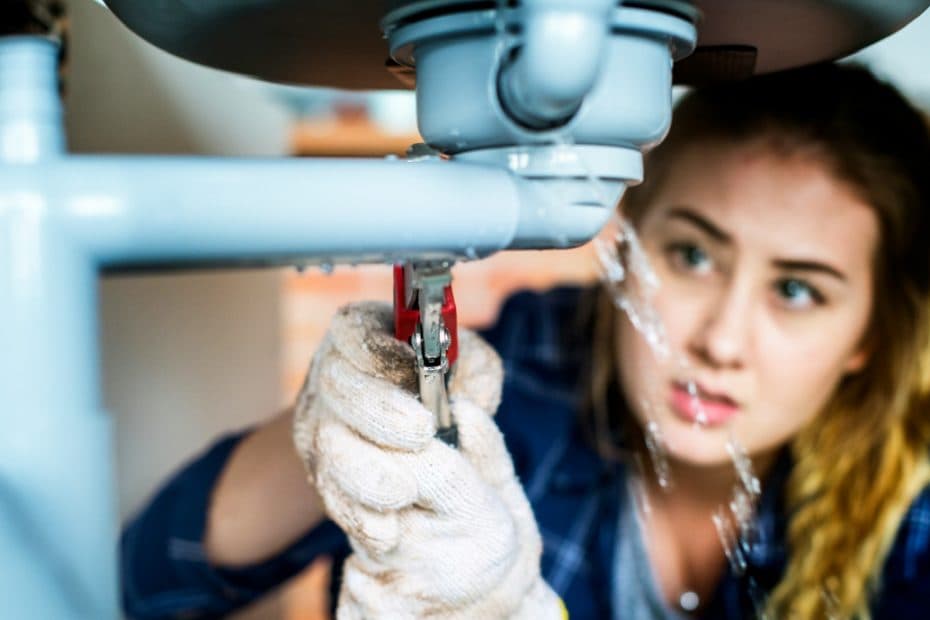
A burst pipe floods your kitchen. Your carrier offers $4,500. The actual repair costs $42,000. That is not a hypothetical, it is the shape of a claim we handled, and it is the rule rather than the exception.
Water damage makes up more than 30% of Florida residential property claims, which makes it the most common and the most underpaid claim type in the state. In this guide we break down the exact technical processes, forensic diagnostics, and legal leverage we use to maximize water damage insurance claims in Florida.
Types of Water Damage Your Florida Policy Actually Covers
Policies are highly restrictive, and coverage turns on exact nomenclature. "Flood" is strictly excluded under a standard HO-3 policy. "Sudden and accidental discharge" is covered. Gradual seepage is excluded. Precise documentation is what keeps your loss on the right side of that line.
Supply Line Failures
Braided steel or PVC hoses feed toilets, dishwashers, washing machines, and ice makers. A sudden burst under pressure dumps hundreds of gallons an hour and saturates subflooring, baseboards, and structural drywall. These are covered under standard sudden-and-accidental clauses.
Cast Iron Pipe Collapse
This is a South Florida structural epidemic. Homes built before 1975 use cast iron waste lines with a 50-year maximum lifespan. The pipe bottoms channel-rot from hydrogen sulfide gas, the pipe collapses, and raw sewage backs up as a Category 3 black-water intrusion. Repair means trenching the concrete slab through the living space, running $30,000 to $80,000+. Carriers aggressively deny these citing "wear and tear," and we counter with forensic engineering reports proving sudden structural failure.
HVAC Condensate Line Failures
Florida humidity demands constant AC operation. Condensate drain lines clog with algae, float switches fail, and drain pans overflow, cascading water through the attic into living spaces and destroying insulation, drywall ceilings, and engineered hardwood. This is a covered peril.
Appliance Mechanical Failures
A ruptured water heater tank, a dishwasher gasket failure, a washing machine pump failure, all covered, but the event must be sudden. Gradual leaks over weeks trigger "constant or repeated seepage" exclusions, which is exactly why the metadata on your photos, proving the timeline, matters so much.

How Insurance Companies Underpay Water Damage Claims
Carrier desk adjusters are trained to minimize corporate loss ratios. The tactics are predictable, and the defenses are systematic.
- The wear-and-tear defense. The carrier reclassifies a sudden pipe burst as "gradual deterioration over time," turning a covered loss into a maintenance issue and denying the claim. We counter with certified plumber affidavits and metallurgical analysis of the failed component.
- Managed Repair Programs (MRP). The carrier invokes a "right to repair" and dispatches a preferred vendor network beholden to the carrier, crews that paint over wet drywall and ignore trapped moisture. You retain the right to opt out in most scenarios. Do not accept MRP.
- Misapplication of mold caps. Florida policies commonly carry a $10,000 mold remediation limit. Carriers illegally fold water extraction and tear-out costs into that cap, exhausting it early and leaving nothing for the rebuild. We strictly bifurcate water damage (full policy limits) from mold damage (the $10k cap).
- Depreciation of non-depreciable assets. Carriers apply depreciation to labor, which is improper in many jurisdictions. We audit the estimate and demand Replacement Cost Value (RCV) over Actual Cash Value (ACV).
80%
Of water damage a carrier's quick visual inspection typically misses, because moisture wicks vertically through framing and pools unseen beneath flooring and behind intact drywall.
IICRC S500: The Restoration Standard Your Carrier Ignores
The Institute of Inspection, Cleaning and Restoration Certification publishes S500, the ANSI-approved standard for professional water damage restoration. Carriers ignore it to suppress mitigation invoices. We enforce S500 compliance, and that starts with classifying the loss correctly.
Water Categories (Toxicity)
- Category 1 (Clean Water): A sanitary source like a broken supply line. Potable, but it degrades to Category 2 within 48 hours.
- Category 2 (Grey Water): Significant contamination, dishwasher discharge, washing-machine overflow, aquarium leaks, with the potential to cause sickness.
- Category 3 (Black Water): Grossly contaminated and pathogenic, sewage backups, toilet overflows, ground surface water. The S500 protocol is mandatory: every porous material touched by Cat 3 must be demolished and discarded, no exceptions. Carriers try to pay for "clean and dry" of Cat 3, and we prohibit that violation of federal safety standards.
Water Classes (Evaporation Rate)
- Class 1: Slow evaporation, minimal absorption (e.g. a concrete floor).
- Class 2: Fast evaporation, an entire room flooded with water wicking up walls less than 24 inches.
- Class 3: Fastest evaporation, an overhead source with walls, ceilings, and floors fully saturated.
- Class 4: Specialty drying for trapped moisture in low-permeance materials (plaster, hardwood, concrete). Carriers routinely deny Class 4 drying times, and we enforce them with psychrometric logs.
Finding Hidden Damage and Managing Mold Caps
Water follows the path of least resistance. Capillary action wicks moisture vertically through drywall and framing and traps it under engineered hardwood. A carrier's visual inspection misses most of it, which is why we rely on instruments, not eyes.
Forensic Moisture Diagnostics
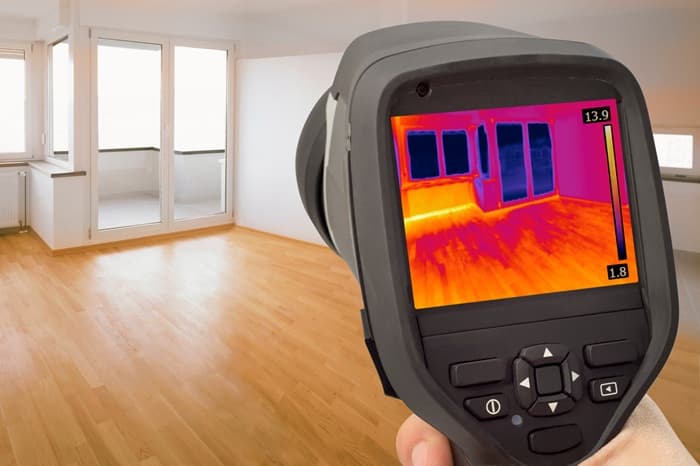
- FLIR thermal imaging detects the temperature differentials caused by evaporative cooling, revealing invisible moisture plumes inside wall cavities.
- Penetrating moisture meters probe baseboards and drywall to measure exact moisture content. Normal wood reads 8–12%; saturated wood exceeds 20%.
- Non-penetrating meters use radio-frequency scanning to map sub-surface water pooling without destructive testing.
Mold Testing Protocols
Carrier adjusters perform a "sniff test," which is meaningless. We deploy licensed Industrial Hygienists who run air-quality tests via spore traps, compare indoor fungal ecology against an outdoor baseline, and identify toxic strains like Stachybotrys, Aspergillus, and Penicillium. A formal IH report, supported by PRM and ERMI testing, forces the carrier to acknowledge the mold presence.
Florida Statutes You Need to Know
Insurance code dictates the timelines and obligations on both sides, and missing a deadline can void coverage.
- Florida Statute 627.70131 imposes the insurer's duty to acknowledge communications, investigate, and pay or deny. The carrier must acknowledge within 14 days and issue a coverage determination within 90 days. We track that statutory clock and file Civil Remedy Notices for bad-faith violations.
- Florida Statute 627.714 is the insured's duty to mitigate: take reasonable emergency measures, shut off the water, extract standing water, tarp leaks. Failure to mitigate equals denial. Keep every receipt.
- Valued Policy Law (VPL) governs total-loss parameters and the application of RCV versus ACV.
How Foremost PA Handles Water Damage Claims Differently
Carriers process claims fast to cut costs. We build forensic, bulletproof files so the carrier cannot dispute the mathematical facts.
Xactimate Precision Estimating
We generate 50-plus-page estimates with granular line items, water extraction from wet carpet and pad, air-mover deployment per IICRC calculations, LGR dehumidifier rental and monitoring, antimicrobial application per square foot, and we price every line against the local Florida zip-code database, capturing state sales tax and exact material quantities. The detail goes down to containment-wall zipper doors, trash bag counts for contaminated insulation, and HEPA-vacuum square footage.
Overhead and Profit (O&P) Enforcement
Industry standard dictates a 20% markup (10% overhead, 10% profit) whenever a project requires coordinating three or more specialized trades, plumber, drywall mechanic, flooring installer. Carriers systematically strip O&P, and we enforce the legal precedent to restore it to the settlement.
The Appraisal Clause
When negotiation stalls, we invoke the policy's appraisal clause, a form of alternative dispute resolution that bypasses litigation. You select an appraiser, the carrier selects an appraiser, the two select an independent umpire, and the result is binding. It is highly effective for under-scoped water claims, and it speeds settlement while avoiding attorney fees.
Case Study: The Miami HVAC Class 3 Intrusion
Miami Residence — Upper-Level HVAC Condensation Failure
An upper-level HVAC condensation pipeline failed and triggered a full-scale Class 3 water intrusion. Over the 48 hours before containment, roughly 400 gallons of Category 1 potable water transitioned to Category 2 grey water through contact with insulation and dust. The carrier's field adjuster ran a 25-minute visual inspection and valued the loss at exactly $4,850, basic drywall patching and three days of fans.
We mobilized a forensic team with FLIR E8 thermal arrays and Delmhorst penetrating probes. The mapping showed moisture had tracked horizontally through the ceiling joists, wicked down three interior partition walls, and pooled beneath high-end engineered oak flooring measuring 24% moisture content, well above the dry threshold. Water had also seeped into the primary electrical panel conduit box, creating a safety hazard.
Our line-item Xactimate estimate integrated electrical remediation, negative-pressure drying mats for the hardwood, 6-mil polyethylene containment barriers, and formal structural drying logs tracking daily relative humidity and psychrometric metrics, plus code-enforced electrical panel relocation thresholds under the current Florida Building Code. The actual structural loss came to $52,300. When the desk adjuster tried to enforce an arbitrary $10,000 water cap buried in a policy endorsement, we argued, on established Florida case law, that the secondary structural damage to non-plumbing components fell outside that endorsement. The claim settled for the full estimate plus 20% Overhead and Profit.
$4,850 carrier estimate → $52,300 plus 20% O&P
Key Takeaways
- Shut off the main water valve immediately to stop the source.
- Document aggressively, 100+ photos, video, and timestamps before anything is moved.
- Mitigate per FS 627.714, extract the water, but do not discard materials until they are inspected.
- Do not give a recorded statement to the carrier without representation.
- Do not sign an Assignment of Benefits with a mitigation contractor.
- Demand IICRC S500 adherence and keep water limits separate from the mold cap.
- Contact a licensed public adjuster immediately.
Water Damage Claims Glossary
- ACV (Actual Cash Value)
- Replacement cost minus depreciation; the insured's immediate payout before repairs.
- RCV (Replacement Cost Value)
- Total cost to replace damaged property with new materials of like kind and quality; paid after repairs are completed.
- Mitigation
- Emergency actions to prevent further damage, extraction, drying, tarping.
- Remediation
- Removal of hazardous materials such as mold, asbestos, and lead.
- Black Water
- Category 3 contaminated water, such as sewage and floodwater.
- Psychrometry
- The study of air and water-vapor mixtures, used to calculate drying equipment requirements.
- Capillary Action
- Upward movement of water through porous materials against gravity.
- LGR
- Low Grain Refrigerant dehumidifier; a high-efficiency commercial drying unit.
- Spore Trap
- An air cassette used to capture mold spores for laboratory analysis.
- Declarations Page
- The summary of a policy listing coverages, limits, deductibles, and endorsements.
- Subrogation
- The carrier's right to pursue a third party that caused the loss, such as a defective appliance manufacturer.
- Bad Faith
- A carrier's failure to act in good faith, including unreasonable delay, unlawful denial, or failure to investigate.
Frequently Asked Questions
It depends on the cause and the wording. A standard HO-3 policy covers "sudden and accidental discharge", a burst supply line, a ruptured water heater, an overflowing AC condensate line, but excludes flood and gradual seepage. Precise documentation of a sudden event, including photo metadata that proves the timeline, is what keeps your loss on the covered side of that line.
Carriers reclassify sudden losses as gradual deterioration to turn a covered claim into an excluded maintenance issue. This is common with cast iron pipe collapse and appliance failures. We counter with certified plumber affidavits and metallurgical analysis of the failed component to prove a sudden, accidental structural failure.
Florida policies often carry a $10,000 mold remediation limit. Carriers illegally fold water extraction and tear-out costs into that cap, exhausting it early and leaving nothing for the rebuild. We strictly separate water damage, paid under your full policy limits, from mold remediation, which is the only cost the $10k cap should apply to.
S500 is the ANSI-approved industry standard for professional water damage restoration. It classifies water by toxicity (Categories 1 to 3) and by evaporation rate (Classes 1 to 4), and dictates required drying and demolition. For Category 3 black water, every porous material must be removed, no exceptions. Carriers ignore S500 to suppress mitigation invoices; we enforce it with documentation and psychrometric logs.
No. Shut off the water and mitigate per Florida Statute 627.714, but do not discard materials until they are documented and inspected. Take 100+ timestamped photos and video first. Discarded evidence is one of the easiest reasons a carrier uses to underpay or deny the claim.
Key terms in this guide
Plain-English definitions from our insurance claim glossary.
You shouldn't have to fight your insurance company alone.
Foremost Public Adjusters has recovered millions for policyholders across South Florida. 18 years. Over 20,000 claims. If your claim was denied, delayed, or underpaid, we will look at it for free. No recovery, no fee.
Foremost Public Adjusters
Licensed public adjusting firm representing policyholders in first-party property claims across South Florida. Florida Public Adjuster License #W807653. Coral Gables, FL.