Roof Damage Insurance Claims in Florida: What Your Policy Covers and How to Win
The carrier approves a $6,000 patch; the roof needs a $38,000 replacement to code. Roof claims are the most aggressively underpaid loss type in Florida. Here is what your policy actually covers, how the Building Code 25% rule can force a full replacement on older roofs, and how to beat the "wear and tear" denial.
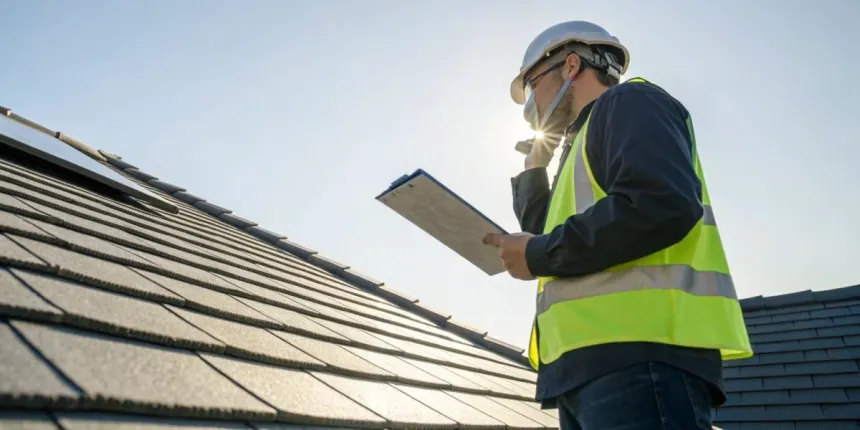
Your roof is the single most expensive component of your home, and it is the one carriers fight hardest to avoid replacing. A roof damage insurance claim in Florida can mean the difference between a $6,000 repair patch and a $38,000 full replacement to code, and the carrier knows exactly which number it would rather write. The gap between those two figures is not decided by the weather. It is decided by documentation, by the Florida Building Code, and by whether anyone on your side of the table knows how to enforce both.
South Florida roofs take a beating that roofs almost nowhere else in the country endure, hurricane-force wind, wind-driven rain, relentless UV, and salt air that degrades fasteners and membranes years faster than the manufacturer's warranty assumes. When that damage finally shows up as a roof leak, carriers reach for the same three words to deny the claim: wear, tear, and age. This guide breaks down what your Florida homeowners policy actually covers on a roof loss, the exact denial tactics carriers use, the Building Code rule that can force a full replacement, and how a licensed public adjuster turns a lowball roof offer into a funded settlement.
Does Florida Homeowners Insurance Cover Roof Damage?
Yes, but coverage turns entirely on cause. A standard Florida HO-3 policy covers roof damage caused by a sudden, accidental, covered peril, wind, hail, hurricane, a fallen tree, or debris impact. What it excludes is damage the carrier can characterize as gradual: normal wear, deterioration, age, poor maintenance, or a manufacturing defect. Nearly every roof claim dispute in Florida is a fight over which side of that line your damage falls on.
The complication is that a 15-year-old tile or shingle roof is, by definition, worn, and carriers exploit that. A single storm can lift, crack, or dislodge tiles and break the water seal on shingles that were performing fine the day before. The damage is storm-caused and covered, but on inspection it looks like age. Proving the storm was the proximate cause of loss, the legal standard that overrides a wear-and-tear exclusion, is the entire game.
§ 627.7011, Replacement Cost on Dwelling Losses
Covered vs. excluded roof causes
| Cause of roof damage | Typically covered? |
|---|---|
| Hurricane / windstorm | Yes, named peril on HO-3 |
| Wind-driven rain intrusion | Yes, when wind first breached the envelope |
| Hail impact | Yes |
| Fallen tree or windborne debris | Yes |
| Sudden interior leak from storm damage | Yes |
| Age / normal wear & tear | No, standard exclusion |
| Gradual deterioration or neglect | No |
| Manufacturing or installation defect | No, pursue installer/warranty |
| Flood / storm surge | No, requires separate NFIP flood policy |
Why Florida Roof Claims Get Denied or Underpaid
Roof claims are denied and underpaid more aggressively than almost any other loss type in Florida, because the dollar amounts are large and the cause is easy to dispute. These are the tactics we see on South Florida claims every week.
1. Reclassifying storm damage as "wear and tear"
The most common denial. The carrier's adjuster or engineer inspects a storm-damaged roof and writes that the cracked tiles or lifted shingles are the result of age and deterioration, not the named storm. We counter with dated weather data (wind speed, hail size, storm track), a licensed roofer's forensic assessment, and photographic evidence of directional wind patterning that a slow, gradual failure cannot produce.
2. Approving a repair when the roof needs replacement
Carriers love a "repair." They will approve patching a few squares of a roof that can no longer be repaired without violating code or voiding the manufacturer's system warranty, and where matching replacement tiles or shingles no longer exist. A spot repair on a discontinued tile profile is not a repair, it is a visible patch that does not restore the roof. This is where the 25% rule below becomes decisive.
3. Paying Actual Cash Value and withholding depreciation
On an RCV policy, the carrier may issue an ACV check first, the depreciated value of the old roof, and then quietly rely on the homeowner never submitting the paperwork to recover the withheld depreciation once work begins. On a full roof, recoverable depreciation can be tens of thousands of dollars. Under § 627.7011, that money is owed.
4. Applying a separate roof deductible or reimbursement schedule
Since 2022, Florida law (§ 627.7011) allows carriers to offer a separate roof deductible of up to 2% of dwelling coverage or 50% of the roof's replacement cost, and to apply a roof surface reimbursement schedule that pays only a depreciated percentage based on roof age and material. These provisions are legal only if properly disclosed and elected. We audit the policy to confirm the schedule was validly applied, and challenge it when it was not.
⚠ Beware the free-inspection roofer who wants your claim
The Florida 25% Roof Rule: When a Repair Must Become a Replacement
This is one of the most powerful tools in a Florida roof claim, and most homeowners have never heard of it. Under Florida's roof mitigation law, if more than 25% of a roof section is damaged or repaired within any 12-month period, that section must be brought up to the current code. For a roof built to codes predating the 2007 Florida Building Code, in practice, one permitted before March 1, 2009, that means full replacement of the section, not a patch.
There is a critical exception from 2022 (SB 4-D): if the roof or roof section was built, repaired, or replaced in compliance with the 2007 Florida Building Code or any later edition, only the damaged portion has to meet current code, not the whole roof. So the 25% rule bites hardest on older roofs. Where it does apply, carriers routinely approve a partial repair while ignoring that the repair itself triggers full replacement. Documenting that the damaged area crosses the threshold, and that a partial repair is not code-compliant, converts a repair offer into a replacement obligation.
How we trigger and prove the 25% threshold
- Drone orthomosaic mapping: a stitched aerial survey that measures the exact damaged area as a percentage of each roof section, not an eyeball estimate.
- Discontinued-material verification: proof that the existing tile profile or shingle line is no longer manufactured, so a matching repair is impossible.
- Licensed roofer's code letter: a written opinion tying the damaged percentage to the code replacement requirement and current Florida Building Code uplift standards.
- Ordinance-or-law coverage: confirming your policy's law-and-ordinance coverage pays the code-upgrade cost the 25% rule forces, secondary water barrier, updated nailing, and more.
What to Do After Roof Damage in Florida
The first 72 hours shape the entire claim. Follow this sequence.
- Document before you touch anything. Take dated, timestamped photos and video of the roof (from the ground and, safely, above), every interior water stain, and all damaged contents. Metadata proving the timeline is powerful evidence.
- Make emergency temporary repairs only. Tarp the roof and stop interior water intrusion to prevent further damage, which Florida policies require you to mitigate. Keep every receipt. Do not make permanent repairs before inspection.
- Report the loss promptly, in writing. Note the date of loss and the storm event. Do not speculate about roof age or prior condition, those statements become the carrier's wear-and-tear argument.
- Get an independent inspection before the carrier writes its scope. A licensed public adjuster and roofer document the full scope, wind uplift, fastener failure, underlayment, decking, and code triggers, before the carrier's adjuster frames the narrative.
- Do not sign an AOB. Keep control of your own claim.
§ 627.70132, Deadline to Report a Roof Claim
Florida Roof Claim Deadlines at a Glance
| Deadline | Requirement |
|---|---|
| Acknowledge claim | Within 7 days of submission (insurer) |
| Begin investigation | Within 7 days (insurer) |
| Coverage decision | Within 60 days of notice (insurer, § 627.70131) |
| Report initial / reopened claim | Within 1 year of date of loss (§ 627.70132) |
| Supplemental claim | Within 18 months of date of loss |
| Breach-of-contract lawsuit | 5 years, Florida statute of limitations |
How Foremost PA Maximizes Florida Roof Damage Claims
Fighting a roof claim alone means arguing building code and depreciation schedules against a carrier's staff engineers and adjusters. A licensed public adjuster levels that table, and works only for you, on a contingency fee capped by Florida law.
Pinecrest, Miami-Dade, Real Outcome
After a windstorm, a Pinecrest homeowner's barrel-tile roof shows cracked and dislodged tiles across two slopes. The carrier approves an $8,200 spot repair and codes the rest as "wear." The tile profile has been discontinued for years, so a matching repair is impossible.
Foremost PA commissions a drone orthomosaic survey showing more than 30% of one roof section is damaged, secures a licensed roofer's code letter, and documents the storm as proximate cause with dated wind data. The claim is rebuilt around full replacement plus code-upgrade costs under the policy's ordinance-or-law coverage. Result: $41,600 funded replacement settlement.
Carrier offer $8,200 repair → settled at $41,600 full replacement
What Foremost PA does on every roof claim
- Free policy & roof review: we read your policy for RCV vs. ACV, roof deductibles, roof-surface schedules, and ordinance-or-law coverage before doing anything else.
- Independent forensic inspection: drone orthomosaic mapping, moisture and decking assessment, and a licensed South Florida roofer's scope at current market rates, not Xactimate database pricing.
- Code enforcement: we build the 25%-rule case and pursue every code-upgrade dollar your law-and-ordinance coverage owes.
- Depreciation recovery: we chase the recoverable depreciation on RCV policies the carrier hoped you would leave on the table.
- Direct carrier negotiation, contingency only: all communication flows through us, and we do not get paid unless you do.
747%
Higher average settlements for Florida policyholders who hired a public adjuster on catastrophe claims, based on Florida OPPAGA research. Foremost PA has recovered over $500 million for policyholders across South Florida.
Key Takeaways
- Florida homeowners insurance covers roof damage from sudden, covered perils (wind, hail, debris), not age or wear, so proving the storm was the proximate cause is everything.
- The Florida Building Code 25% rule can force a full roof replacement, not a patch, when more than 25% of an older roof section (built to codes before the 2007 FBC) is damaged.
- On an RCV policy you are owed recoverable depreciation under § 627.7011; do not accept the ACV check as final.
- Watch for separate roof deductibles and roof-surface reimbursement schedules, they are only valid if properly disclosed and elected.
- Document everything, tarp to mitigate, make no permanent repairs before inspection, and never sign an AOB to a roofer.
- Report within 1 year of the date of loss (§ 627.70132), but act immediately.
- A licensed public adjuster works only for you on contingency, OPPAGA documented 747% higher average settlements with representation.
Frequently Asked Questions
Yes, when the damage is caused by a sudden, covered peril, wind, hurricane, hail, or falling debris. A standard HO-3 policy excludes damage the carrier can attribute to age, normal wear and tear, gradual deterioration, or poor maintenance. Almost every roof claim dispute in Florida comes down to proving the storm, not age, was the proximate cause of loss. Flood and storm-surge roof damage is not covered by a homeowners policy and requires separate NFIP flood coverage.
Under the Florida Building Code, if more than 25% of a roof section is damaged or repaired within any 12-month period, that section must be brought up to current code. For a roof built to codes before the 2007 Florida Building Code (permitted before March 1, 2009), that means full replacement, not a patch. A 2022 exception (SB 4-D) limits newer, code-compliant roofs to repairing only the damaged portion, so the rule bites hardest on older roofs. Where it applies, documenting that the damaged area crosses 25%, often with drone mapping, converts a repair offer into a replacement obligation.
Because it is the easiest way to avoid paying. A worn-looking older roof that was actually damaged by a specific storm gets coded as age-related deterioration, which is excluded. This is beatable: dated wind and hail data, a licensed roofer’s forensic assessment, and photographic evidence of directional wind patterning establish the storm as the proximate cause, the legal standard that overrides a wear-and-tear exclusion.
You can get a full replacement when the damage triggers the 25% rule, when the roofing material has been discontinued and cannot be matched, or when a repair would violate code or void the system warranty. Carriers prefer to approve repairs; a public adjuster documents why a patch does not restore the roof and enforces the replacement obligation, plus code-upgrade costs under your ordinance-or-law coverage.
Under Florida Statute 627.70132, you must report an initial or reopened claim within 1 year of the date of loss, and a supplemental claim within 18 months. Your policy’s prompt-notice requirement is much shorter, so report the loss immediately and treat the statutory window as an outer limit, not a target.
Key terms in this guide
Plain-English definitions from our insurance claim glossary.
You shouldn't have to fight your insurance company alone.
Foremost Public Adjusters has recovered millions for policyholders across South Florida. 18 years. Over 20,000 claims. If your claim was denied, delayed, or underpaid, we will look at it for free. No recovery, no fee.
Foremost Public Adjusters
Licensed public adjusting firm representing policyholders in first-party property claims across South Florida. Florida Public Adjuster License #W807653. Coral Gables, FL.