Denied Insurance Claim in Florida? Here's Exactly What to Do Next
A denial letter is not the final word, it is the opening move in a negotiation most Florida homeowners do not know they can win. Here are the 7 exact steps to read the denial, request your claim file, build an evidence package, file a formal appeal, and escalate under Florida law.
Your insurance company has a team of adjusters, engineers, and attorneys working to minimize what they pay you. When they deny your claim, that letter is not the final word, it is the opening move in a negotiation most Florida homeowners do not know they can win. A study by Florida's Office of Program Policy Analysis and Government Accountability (OPPAGA) found that homeowners who hired a public adjuster walked away with settlements up to 747% higher on catastrophe claims than those who negotiated on their own. Not a modest bump, the difference between a $12,000 check that barely covers your kitchen floor and an $89,000 settlement that actually puts your home back together.
And yet, most Florida homeowners have never heard of a public adjuster. They do not know what one does, when to call, or that they even have the right to hire one. When a claim is denied, the only adjuster they have ever spoken to is the one their insurance company sent, someone whose salary depends on keeping the carrier's costs down, not on making sure you are made whole.
In this guide, we break down exactly what to do the moment your Florida insurance claim is denied: from reading the denial letter correctly, to filing a formal appeal, to invoking your statutory rights under Florida law. Every step is specific to Florida statutes and South Florida's claims environment.
Step 1: Read the Denial Letter Like a Lawyer
Your denial letter is not the end of the road, it is the roadmap for your appeal. Under Florida Statutes § 627.70131, insurers are legally required to provide a written explanation citing the specific policy provisions they relied on to deny your claim. A vague denial letter is itself potentially actionable.
What to identify immediately
- Exact policy exclusion or clause: The specific section they cite. Pull your policy and read it. The exclusion they are applying may not say what they claim it says.
- Subjective language: "Wear and tear," "pre-existing damage," "lack of maintenance," these are disputable with independent inspection evidence.
- Statutory deadline compliance: Did the carrier notify you of denial within 30 days? Under Florida's Homeowner Claims Bill of Rights, they must. A missed deadline is evidence of bad faith.
- Damage misclassification: Wind-driven rain coded as "flooding," storm surge coded as wind, misclassification disputes are common in Broward County and Miami-Dade hurricane claims and are frequently overturned with correct documentation.
§ 627.70131 — Florida Claims Bill of Rights
Do not call your insurer to discuss the denial before reviewing the letter in full. Anything you say can be used to narrow your claim. From this point forward, communicate only in writing.
Step 2: Understand Which Denial Reasons Are Beatable
Not all denial reasons carry equal weight. Knowing which you are dealing with determines strategy and urgency.
Easily Disputable — Act Fast
- Insufficient documentation: Fixable. A licensed public adjuster rebuilds your claim package with professional photos, moisture readings, licensed contractor estimates, and thermal imaging reports.
- Late notice of loss: Florida courts require insurers to show actual prejudice from any delay, not just cite the policy deadline. Minor delays caused by evacuation, hospitalization, or storm access issues rarely hold up.
- Damage misclassification: Wind-driven rain coded as flood, storm damage coded as maintenance failure. Misclassification disputes are winnable with correct independent documentation.
Requires Professional Help
- Wear and tear / maintenance exclusions: Carriers use these to reclassify storm and water damage. An independent inspection can establish the storm event as the proximate cause of loss, the legal standard that overrides the exclusion.
- ACV vs. RCV disputes: If the insurer pays Actual Cash Value (ACV) but your policy carries Replacement Cost Value (RCV) coverage, you are owed the recoverable depreciation on top, often tens of thousands of dollars.
- Coverage gap claims: Policy language disputes require a full independent policy analysis before filing any response.
Step 3: Request Your Complete Claim File
Most Florida homeowners do not know they are entitled to every document the insurer used to evaluate their claim. You have a legal right to this file, request it in writing immediately.
Request the following in writing, sent via certified mail
- The full claim file including all adjuster notes and internal communications
- The field adjuster's damage assessment and scope of loss document
- All engineering, roofing, or third-party inspection reports the carrier ordered
- The Explanation of Benefits (EOB) and denial notice with full policy citations
- All photographs taken by the carrier's adjuster during their inspection
Why this matters: if the carrier's own adjuster documented damage that their denial letter ignores, that contradiction becomes the foundation of your appeal, and potentially a bad-faith claim. Foremost PA reviews the full claim file as a standard first step on every denied South Florida claim. We find material discrepancies in the majority of them.
Step 4: Commission an Independent Inspection Before Making Any Repairs
The carrier's adjuster works for the insurance company. A licensed public adjuster works for you. Same property. Same damage. Radically different findings, because the incentive structures are opposite.
⚠ Do not make permanent repairs before the inspection is complete
A proper independent inspection includes
- High-resolution photography of all damaged areas including concealed damage behind drywall or under flooring
- Moisture meter readings and infrared thermal imaging, critical for water and mold claims in Miami-Dade and Broward County
- Licensed South Florida contractor scope of work and line-item repair estimate at current market rates, not Xactimate database pricing
- Engineering or structural reports where applicable: roof systems, load-bearing elements, foundations
- Drone imagery for roof and exterior damage, standard practice on South Florida hurricane claims
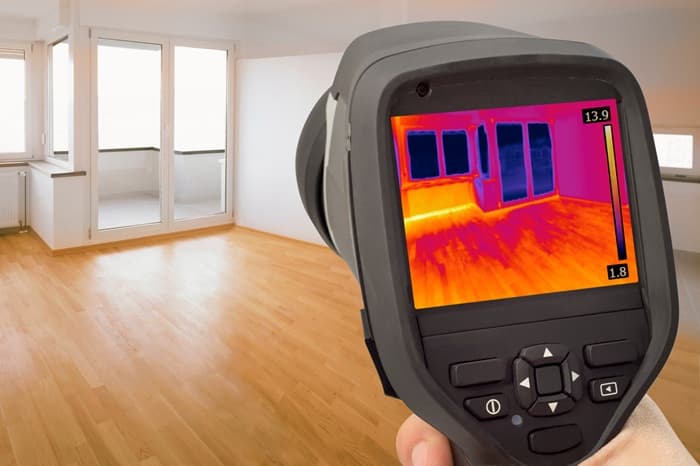
This evidence package does two things: it supports the formal appeal, and if the insurer continues to deny, it becomes the foundation for a Civil Remedy Notice (CRN) under § 624.155, Fla. Stat. You cannot skip this step and expect to win.
Step 5: File a Formal Written Appeal — The Right Way
Every Florida insurer has an internal appeals process defined in your policy. This is your first formal reversal opportunity, and it creates the documented paper trail that supports every escalation path that follows.
A winning appeal letter must include
- Point-by-point rebuttal: Address every denial reason stated in the letter with specific counter-evidence. Generalities lose.
- Policy language citation: Quote the exact coverage section that applies to your loss alongside the exclusion they cited.
- Independent inspection package attached: Full report, thermal imaging results, licensed contractor estimate.
- Statutory references: Cite § 627.70131 and Florida's Homeowner Claims Bill of Rights obligations explicitly.
- Written deadline demand: Request a written response within 30 days per statute. Name the statute.
Send via certified mail with return receipt. Email alone is insufficient for a formal record. Once this appeal is submitted, the clock restarts on the carrier's statutory response obligations. Non-response within the statutory window is itself evidence of bad faith.
Step 6: Escalate Through Florida's Legal Framework
If the internal appeal fails, Florida law provides several escalation paths before, or instead of, litigation. These are not last resorts, they are structured tools that change carrier behavior.
Florida Department of Financial Services (DFS) Complaint
File at myfloridacfo.com at zero cost. DFS investigates and mediates. Particularly effective for Broward County and Miami-Dade claims where the DFS has concentrated oversight activity. Frequently prompts carriers to reopen claims without further escalation.
Florida Neutral Evaluation Program
State-administered mediation for residential property claims. Non-binding but effective, faster and cheaper than litigation, and frequently produces settlements the carrier refused to offer pre-mediation.
Civil Remedy Notice (CRN) Under § 624.155
The most powerful pre-litigation tool in Florida. A formal legal notice giving the insurer 60 days to cure their bad-faith conduct by paying your claim in full. If they do not, you can sue for damages beyond the policy limit, including attorney's fees. A CRN must be drafted precisely, incorrect language voids it. Foremost PA files CRNs in coordination with bad-faith attorneys in our network.
Appraisal Clause
If the carrier accepts coverage but disputes the dollar value, your policy almost certainly contains an appraisal clause. Both sides appoint independent appraisers, and they select an umpire if they cannot agree on value. The resulting award is binding. On South Florida water-damage and roof claims, appraisal has produced 3–4x the carrier's initial valuation in documented cases.
Step 7: Track Every Deadline — Missing One Can Kill Your Claim
Florida property insurance claims are time-sensitive at every stage. Deadline misses are one of the most common ways valid claims are lost, and carriers know it.
| Deadline | Requirement |
|---|---|
| Acknowledge claim | Within 7 days of submission (insurer) |
| Coverage decision | Within 30 days of filing (insurer) |
| Pay undisputed amount | Within 60 days of filing (insurer) |
| Hurricane notice of loss | Within 3 years of storm date (§ 627.70132) |
| General property claims | Prompt notice; check policy (typically 60–90 days) |
| Bad-faith CRN cure period | 60 days for insurer to remedy after CRN filing |
| Breach of contract lawsuit | 5 years — Florida statute of limitations |
How Foremost PA Turns Denied Claims Into Full Settlements
The biggest mistake Florida homeowners make after a denial is fighting the carrier alone. Insurance companies deploy professional adjusters, staff attorneys, and internal claims protocols built to minimize payouts. You are not on an even playing field without a professional in your corner.
Miramar, Broward County — Real Outcome
Maria files a hurricane water-intrusion claim after rain drives through a failing roof seam. The carrier sends their adjuster, cites "wear and tear," and issues a denial. Her licensed Broward contractor's repair quote: $74,000. Carrier offer: $0.
Foremost PA conducts an independent inspection, documents the storm event as the proximate cause, sources contractor bids at current South Florida market rates, and files a formal appeal with a full evidence package. Result: $74,000 settlement, 63 days from denial to funded settlement.
Carrier offer $0 → settled at $74,000 in 63 days
What Foremost PA does from day one
- Free policy & claim-file review (24–48 hours): We pull the full claim file, cross-reference the denial against your policy, and identify every disputable element.
- Independent inspection: Moisture meters, thermal imaging, drone photography, and a licensed South Florida contractor scope at market rates, not Xactimate pricing.
- Formal appeal construction: Point-by-point rebuttal with full statutory citations. Not a form letter.
- Direct carrier negotiation: All carrier communication flows through us. The dynamic changes measurably when a licensed PA is on record.
- Escalation when required: CRN filing under § 624.155 and coordination with bad-faith attorneys. Contingency only, we do not get paid unless you do.
747%
Higher average settlements for Florida policyholders who hired a public adjuster on catastrophe claims, based on Florida OPPAGA research. We have recovered over $500 million for policyholders across South Florida.
Key Takeaways
- Read the full denial letter and identify every statute and policy citation they used.
- Request your complete claim file, you have a legal right to it; request in writing.
- No permanent repairs until the independent inspection is complete.
- Commission an independent inspection: photos, moisture readings, thermal imaging, contractor scope at South Florida market rates.
- File a formal written appeal via certified mail with the full evidence package attached.
- Escalate through: DFS complaint → neutral evaluation → appraisal clause → CRN § 624.155.
- Track all statutory deadlines, especially the 3-year hurricane notice window.
- Hire a licensed public adjuster: OPPAGA documented 747% higher average settlements with PA representation.
Frequently Asked Questions
Florida law does not set a single universal internal appeal deadline, your policy defines the window (typically 30 to 60 days from the denial date). The broader statute of limitations for breach of contract is 5 years from date of loss. Hurricane-specific claims require notice within 3 years of the storm date under Florida Statute 627.70132. Do not wait. The earlier you engage, the more options you have.
Yes. Florida law allows denied or underpaid claims to be reopened when new evidence is presented, including independent inspection reports, contractor estimates, or documentation the carrier did not previously have. As long as the claim falls within the limitation period, it can be supplemented. Foremost PA has reopened denied Broward County and Miami-Dade claims that were months or years old.
Bad faith under Florida Statute 624.155 occurs when an insurer fails to investigate promptly, denies a valid claim without reasonable basis, fails to acknowledge communications, or uses dilatory tactics to delay payment. If your carrier missed statutory deadlines, denied without citing specific provisions, or ignored submitted evidence, a bad-faith claim may apply on top of the original denial. The Civil Remedy Notice (CRN) is the formal trigger.
It depends on the denial type. If the issue is documentation, damage scope, or valuation, a licensed public adjuster is typically faster and cheaper than a lawyer (10 to 20% contingency vs. 33 to 40% attorney fee) and better equipped for the evidence-building phase. If the carrier commits demonstrable bad faith or fraud, attorney involvement becomes necessary. Foremost PA coordinates with bad-faith attorneys when CRN escalation is warranted.
Florida DFS regulates PA fees. Non-catastrophe claims are capped at 20%; during a declared state of emergency, the cap is 10%. Fees are contingency-only, zero upfront cost, zero fee if no recovery. In virtually every documented South Florida case, the net settlement after the PA fee is significantly higher than the carrier’s original offer or denial. The PA fee does not cost you money. Fighting alone does.
Key terms in this guide
Plain-English definitions from our insurance claim glossary.
You shouldn't have to fight your insurance company alone.
Foremost Public Adjusters has recovered millions for policyholders across South Florida. 18 years. Over 20,000 claims. If your claim was denied, delayed, or underpaid, we will look at it for free. No recovery, no fee.
Foremost Public Adjusters
Licensed public adjusting firm representing policyholders in first-party property claims across South Florida. Florida Public Adjuster License #W807653. Coral Gables, FL.