Does Homeowners Insurance Cover Mold in Florida? A Homeowner's Claim Guide
A pipe bursts, the carrier pays to dry the floor, and then a $10,000 line item swallows your entire mold budget before remediation even starts. Here is when your policy covers mold, the $10,000-cap trap carriers use to underpay, and how to keep water damage and mold on separate ledgers.
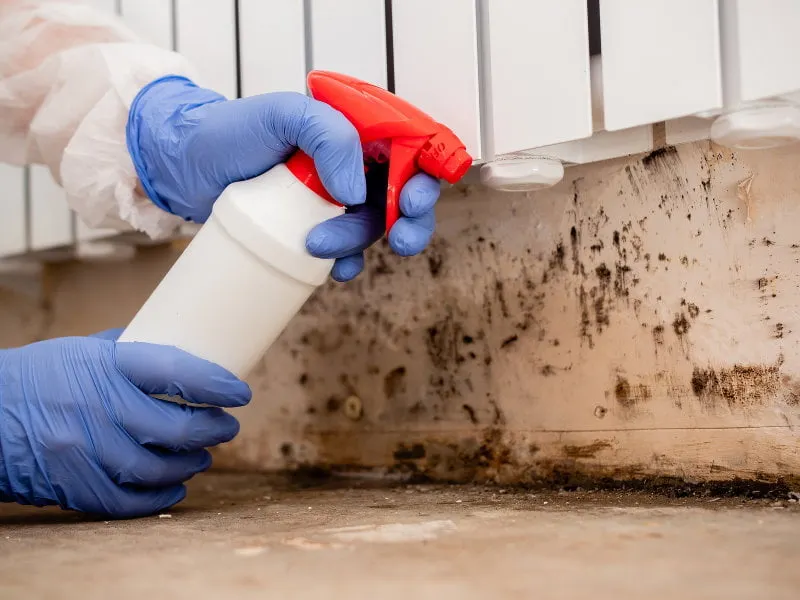
A pipe bursts, the carrier pays to dry the floor, and then a $10,000 line item quietly swallows your entire mold budget before remediation even starts. In Florida's climate, mold is not a rare complication, it is the default outcome of any water loss left even a few days: the EPA warns that mold can begin growing within 24 to 48 hours of water exposure. Here is exactly when your policy covers mold, the $10,000-cap trap carriers use to underpay, and how to keep water damage and mold on separate ledgers.
Does homeowners insurance cover mold in Florida? The honest answer is: sometimes, and carriers work hard to make it "no." Mold coverage is one of the most misunderstood and most manipulated parts of a Florida property claim, because the answer depends entirely on what caused the mold, and because nearly every policy caps what the insurer will pay for it. In a state where summer humidity sits above 70% for months and a wet wall grows visible mold in 24 to 48 hours, that combination is expensive.
This guide breaks down when Florida homeowners insurance covers mold, when it does not, how the notorious $10,000 mold cap is abused to gut legitimate claims, and how a licensed public adjuster keeps your water-damage payout from being folded into a mold sublimit it was never meant to touch.
When Does Florida Insurance Cover Mold?
Mold itself is almost never a "covered peril." What matters is the cause of the mold. Florida policies cover mold when it results directly from a sudden, accidental, covered water loss, and exclude it when it grows from anything gradual or preventable.
Covered vs. excluded mold causes
| Origin of the mold | Typically covered? |
|---|---|
| Burst pipe / sudden supply-line failure | Yes, up to the mold cap |
| Ruptured water heater or appliance overflow | Yes, up to the mold cap |
| Roof or window breach from a covered storm | Yes, up to the mold cap |
| Water used to extinguish a covered fire | Yes |
| Long-term humidity / condensation | No, maintenance issue |
| Slow, gradual leak (undetected over weeks) | Usually no, "constant seepage" exclusion |
| Flood / storm surge | No, needs NFIP flood policy |
| Poor ventilation / deferred maintenance | No |
The dividing line is the same one that governs water claims: sudden and accidental is covered; gradual and preventable is not. That is exactly why carriers try to reclassify a sudden pipe burst as a "long-term leak," it moves your mold from the covered column to the excluded one. Documentation of the timeline is what holds the line.
The $10,000 Mold Cap, and How Carriers Abuse It
Here is the part that costs Florida homeowners the most money. Most Florida policies contain a mold remediation sublimit, commonly $10,000 (some policies offer higher endorsements). That cap is supposed to apply only to the cost of mold remediation, killing and removing the mold itself.
What carriers routinely do instead is fold water extraction, drying, and demolition/tear-out costs into that same $10,000 bucket. Those are water-damage costs, payable under your full dwelling limits, not mold costs. By misclassifying them, the carrier exhausts the mold cap early and leaves little or nothing for the actual remediation and rebuild.
The fix, separate the ledgers
Is Black Mold Covered by Insurance in Florida?
There is no special "black mold" coverage, insurance does not care about the color or species (Stachybotrys or otherwise). Coverage still turns on the cause. If black mold grew from a covered burst pipe, it is covered up to your mold cap like any other mold; if it grew from years of humidity, it is excluded. The health severity of black mold does, however, raise the stakes on getting the remediation scope right, which is why the IICRC standard below matters.
Why Mold Remediation Must Follow IICRC S520
IICRC S520 is the ANSI-approved industry standard for professional mold remediation. It defines containment, negative-air pressure, the removal of porous materials, and post-remediation verification testing. Carriers frequently try to treat mold as a simple "spray and wipe" cleaning line item rather than the contained, tested remediation S520 requires, which is how a real $22,000 remediation gets estimated at $3,000.
What proper S520-compliant documentation includes
- Moisture mapping and infrared thermal imaging to find hidden moisture behind walls and under flooring.
- Lab-analyzed air and surface samples establishing mold type and spore counts.
- A containment and remediation protocol from a licensed mold assessor (Florida licenses mold assessors and remediators separately under Ch. 468).
- Post-remediation clearance testing proving the job was actually completed to standard.
⚠ Do not throw anything away, and do not "clean it up" first
How Long Do You Have to File a Mold Claim in Florida?
Because mold traces back to a water event, the water-loss clock governs it.
§ 627.70132, Reporting Deadline
How Foremost PA Maximizes Florida Mold Claims
Fighting a mold claim alone means arguing sublimits, causation, and remediation standards against a carrier's adjusters. A licensed public adjuster works only for you, on a contingency fee capped by Florida law (20% non-catastrophe, 10% during a declared emergency), with no fee if there is no recovery.
Coral Gables, Miami-Dade, Real Outcome
A second-floor supply line fails in a Coral Gables home and floods below; by the time it is found, mold has spread through the wall cavity. The carrier folds extraction and tear-out into the $10,000 mold cap and offers $9,800 total.
Foremost PA re-allocates water mitigation and demolition to full dwelling limits, documents the sudden-loss timeline with photo metadata, and secures an S520 remediation protocol from a licensed assessor. Result: $58,400 funded settlement.
Carrier offer $9,800 (capped at mold sublimit) → settled at $58,400
What Foremost PA does on every mold claim
- Free policy & claim review: we read your mold sublimit, water coverage, and exclusions before doing anything else.
- Separate the ledgers: water mitigation to full limits, mold-only costs to the cap, the single biggest recovery lever.
- Prove sudden-and-accidental causation: plumber affidavits, moisture mapping, and photo-metadata timelines that defeat the "gradual leak" reclassification.
- Enforce IICRC S520: licensed-assessor protocol, containment, and clearance testing at real South Florida costs, not a "cleaning" line item.
- Direct carrier negotiation, contingency only: we do not get paid unless you do.
747%
Higher average settlements for Florida policyholders who hired a public adjuster on catastrophe claims, based on Florida OPPAGA research. Foremost PA has recovered over $500 million for South Florida policyholders.
Key Takeaways
- Florida insurance covers mold when it results from a sudden, covered water loss (burst pipe, storm breach), not from humidity, gradual leaks, or neglect.
- The $10,000 mold cap applies only to mold remediation; carriers illegally fold water extraction and tear-out into it to exhaust it early.
- "Black mold" has no special coverage, cause, not color, decides everything.
- Remediation must follow IICRC S520 (containment + clearance testing), not a "spray and wipe" estimate.
- Report within 1 year of the water event (§ 627.70132), and immediately, because mold spreads in 24 to 48 hours.
- Never discard moldy materials before documentation; sample and photograph first.
- A public adjuster works only for you on contingency; separating the water and mold ledgers alone often multiplies the recovery.
Frequently Asked Questions
Yes, but only when the mold results from a sudden, covered water loss, a burst pipe, a ruptured water heater, or a storm breach, and typically only up to your policy's mold sublimit (commonly $10,000). Mold caused by long-term humidity, a slow undetected leak, flood, or deferred maintenance is excluded. The cause of the water, not the mold itself, decides coverage.
Most Florida policies limit mold remediation to about $10,000, though higher endorsements exist. Critically, that cap should apply only to mold remediation, not to water extraction, drying, or demolition, which are water-damage costs payable under your full dwelling limits. Carriers frequently fold those water costs into the mold cap to exhaust it; separating the two is the single biggest recovery lever on a mold claim.
There is no separate "black mold" coverage, insurers do not rate by species or color. Coverage depends on the cause: black mold from a covered burst pipe is covered up to your mold cap; black mold from years of humidity is excluded. Its health severity does make getting the remediation scope right (per IICRC S520) more important.
Because mold traces to a water event, Florida Statute 627.70132 governs: report an initial or reopened claim within 1 year of the date of loss and a supplemental claim within 18 months. Your policy's prompt-notice requirement is much shorter, and mold spreads within 24 to 48 hours in Florida's climate, so document and report immediately.
For anything beyond minor surface mold, usually yes. Mold claims turn on causation, sublimit allocation, and IICRC S520 remediation scope, exactly where carrier estimates fall short. A licensed public adjuster works only for you on a contingency fee capped by Florida law (20% non-catastrophe, 10% during a declared emergency), with no fee if there is no recovery.
Key terms in this guide
Plain-English definitions from our insurance claim glossary.
You shouldn't have to fight your insurance company alone.
Foremost Public Adjusters has recovered millions for policyholders across South Florida. 18 years. Over 20,000 claims. If your claim was denied, delayed, or underpaid, we will look at it for free. No recovery, no fee.
Foremost Public Adjusters
Licensed public adjusting firm representing policyholders in first-party property claims across South Florida. Florida Public Adjuster License #W807653. Coral Gables, FL.