Public Adjuster vs. Insurance Company Adjuster: Why the Difference Costs You Thousands
Two adjusters enter the picture after a Florida claim, one sent by your carrier, one working for you. Same license, same property, radically different findings. Here is the full comparison, the conflict of interest behind it, and the real South Florida outcomes that follow.

When you file a property-damage claim in Florida, two adjusters enter the picture. One is sent by your insurance company. The other works for you. They carry the same license. They visit the same damaged property. But their findings, and the dollar amounts that follow, are rarely the same. In documented Florida hurricane claims, policyholders who hired a public adjuster received settlements averaging 747% higher than those who relied solely on the carrier's adjuster (OPPAGA). Not a modest improvement, the difference between a $12,000 check that barely covers your kitchen floor and an $89,000 settlement that actually restores your home.
Quick Answer
The practical difference: the carrier's adjuster makes one visit using carrier-approved Xactimate pricing; a public adjuster runs a full independent inspection at real South Florida contractor rates and manages the claim through final payment. For any Florida claim above roughly $10,000, that gap routinely runs into the tens of thousands.
Most Florida homeowners do not know they have the right to hire their own adjuster. Insurance companies do not volunteer that information. When damage happens, the only adjuster they ever meet is the one the carrier sends, someone whose compensation depends on keeping the carrier's costs down, not on making sure you are made whole.
Below, we break down exactly how each type of adjuster operates, what motivates their findings, and why the adjuster you choose, or fail to choose, determines whether your settlement covers your actual damages or leaves you thousands short.
What Is an Insurance Company Adjuster?
An insurance company adjuster, staff adjuster or independent adjuster, is the person your insurer sends to evaluate your property after you file a claim. They are either a full-time carrier employee or a contractor hired on a per-claim basis.
Key facts about the carrier's adjuster
- Licensed by Florida DFS, but their client is the insurance company, not you.
- Compensated by the carrier, a structural conflict of interest built into every assessment they make.
- Single-visit protocol, one inspection, carrier-defined scope, no return visits after the file is closed.
- Xactimate pricing, carrier-approved estimating software with database prices that routinely run 30–60% below actual South Florida contractor market rates on roofing and water-mitigation work.
- No obligation, to find damage you did not specifically point out or to maximize your settlement.
Independent adjusters, contractors hired per-file rather than staff employees, are common after major storm events. They are paid to close files quickly, not thoroughly. Catastrophe (CAT) adjusters deployed across South Florida after hurricane season are the highest-risk category for incomplete scope and undervaluation.
What Is a Public Adjuster?
A public adjuster is a licensed insurance professional who works exclusively for the policyholder, never the insurance company. In Florida, public adjusters are licensed and regulated by the Florida Department of Financial Services under Chapter 626, Florida Statutes, specifically § 626.854.
What a public adjuster actually does
- Conducts a full independent inspection, including areas the carrier's adjuster did not access or document.
- Builds a complete evidence package: professional photography, moisture-meter readings, infrared thermal imaging, and licensed contractor scope and estimates at current South Florida market rates.
- Analyzes your policy to identify all applicable coverages, Additional Living Expenses (ALE), Replacement Cost Value (RCV), code-upgrade coverage, loss of rents.
- Handles all carrier communication, documentation, and negotiation on your behalf.
- Works on contingency: 20% cap non-catastrophe, 10% cap during a declared state of emergency. Zero fee if no recovery.
Florida Statute § 626.854 — Public Adjuster Definition
Full Comparison: Public Adjuster vs. Insurance Company Adjuster
Every material difference between the two adjuster types, what the carrier does not explain when their adjuster shows up at your door.
| Factor | Public Adjuster (Works for YOU) | Insurance Adjuster (Works for THEM) |
|---|---|---|
| Employer | You — the policyholder | The insurance company |
| Pay structure | Contingency % of your settlement | Salaried or per-file by carrier |
| Primary obligation | Maximize your payout | Minimize carrier’s exposure |
| Inspection depth | Full independent: moisture meters, thermal imaging, drone, contractor scope | Single visit, carrier-defined checklist |
| Pricing basis | Real South FL contractor bids at current market rates | Xactimate database (often 30–60% below actual South FL market) |
| Damage scope | All covered damage including hidden/secondary | Documents what’s in their carrier-defined scope |
| Supplement claims | Files supplements proactively as repair reveals new damage | No incentive to supplement after file is closed |
| Policy analysis | Identifies all coverages: ALE, RCV, code upgrade, loss of rents | Interprets policy to limit carrier liability |
| Florida license | Licensed by FL DFS under § 626.854, fee-capped | Licensed, employed/contracted by carrier |
| Bad-faith action | Identifies statutory violations, files CRN § 624.155 | No incentive to flag carrier violations |
| Cost if no recovery | Zero — contingency only | N/A — carrier pays regardless |
| Documented outcome | 747% higher average settlement (OPPAGA) | Baseline carrier offer |
How the Conflict of Interest Plays Out on Real Florida Claims
The structural conflict is not theoretical. It produces specific, repeatable outcomes in South Florida claims cycles. Three mechanisms drive the gap between what policyholders get and what they are actually owed.
The Scope-Limitation Problem
The carrier's adjuster documents visible damage on a single visit. What they consistently undercount: secondary damage, concealed moisture behind drywall or under flooring, mold forming in wall cavities after water intrusion, and structural damage to load-bearing elements not visible from a standard walk-through.
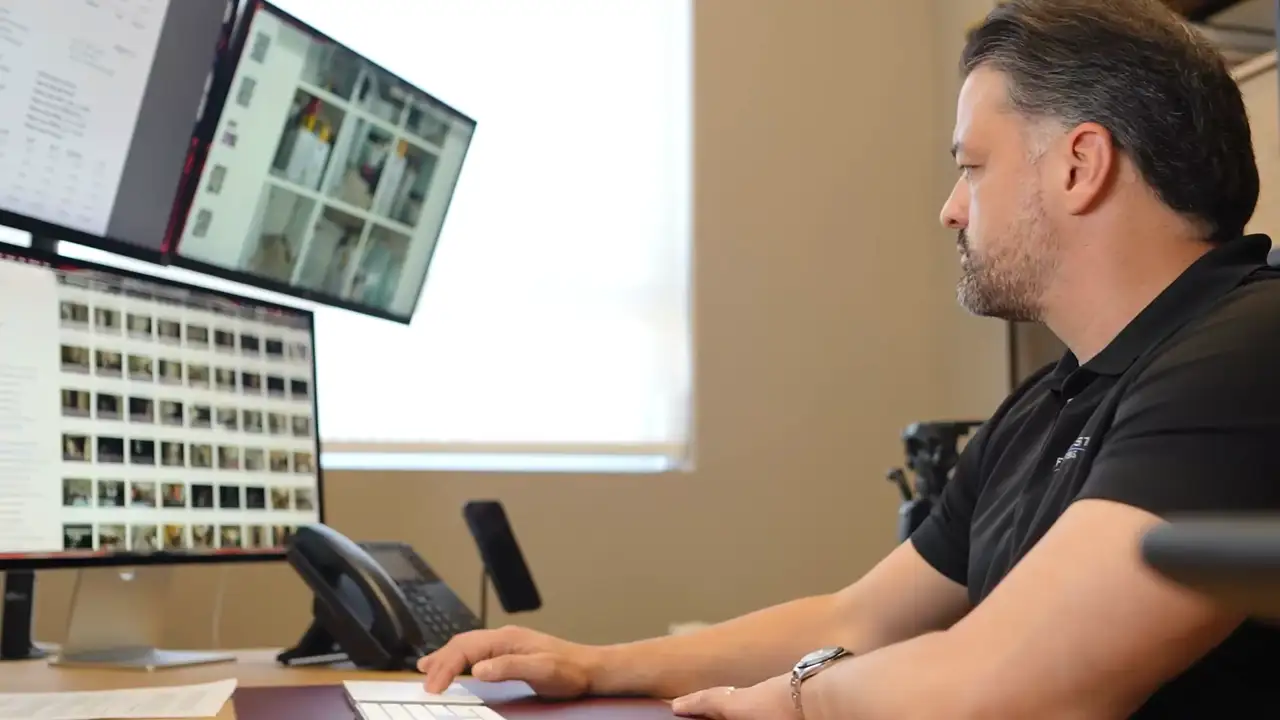
A public adjuster uses moisture meters, infrared thermal imaging cameras, and where necessary destructive testing to find damage that is invisible to the naked eye. In water-damage claims across Broward County and Miami-Dade, this is frequently the difference between a $15,000 settlement and a $60,000+ settlement on the same property.
The Xactimate-Pricing Problem
Most Florida homeowner policies provide Replacement Cost Value (RCV) coverage, meaning you are entitled to what it actually costs to repair your home to pre-loss condition. But the carrier's adjuster uses Xactimate: estimating software with pricing databases that lag South Florida's actual contractor market. The gap between Xactimate database pricing and real South Florida contractor quotes is routinely 30–60% on roofing and water-mitigation work alone.
A public adjuster sources estimates directly from licensed South Florida contractors and submits those as the claim basis. The carrier must then justify their Xactimate figure against a real market bid, a negotiation dynamic that consistently produces higher settlements.
The Single-Visit Problem
The carrier's adjuster makes one visit. If damage reveals itself later, mold not yet visible, roof leaks in the next rain, structural issues surfacing during demo, you are fighting to supplement a closed file. A public adjuster monitors the claim through final payment, filing supplements proactively as repair work uncovers additional damage. Supplement management is standard PA practice. It is something the carrier's adjuster has zero incentive to do.
Real South Florida Outcomes
Tampa: carrier offered $12,000 → PA settlement $95,000.
Cape Coral: claim denied outright → PA reopened, $67,000 approved.
Miami-Dade: carrier offered $28,000 → PA settlement $210,000.
Documented outcomes from the same market Foremost PA operates in
Why the 2022–2023 Reforms Made a Public Adjuster More Important, Not Less
Florida's property-insurance laws were overhauled in late 2022 and 2023. Two changes directly affect how you should handle a claim:
- Shorter deadlines. Under § 627.70132, you now have just 1 year from the date of loss to file an initial or reopened claim, and 18 months for a supplemental claim, down from the old 2-year/3-year windows. Waiting is far more dangerous than it used to be.
- No more automatic attorney fees. Florida repealed the one-way attorney-fee provision for property-insurance lawsuits (§ 627.428(4)). Policyholders can no longer count on the carrier covering their legal fees in a dispute, which makes a contingency-based public adjuster, who builds the strongest possible claim before litigation is ever needed, a more cost-effective first line of defense.
The Full Adjuster Taxonomy: Every Type in the Florida Claims Ecosystem
Florida homeowners encounter multiple adjuster types during a claim. Understanding who each one works for changes how you respond to them.
1. Staff Adjuster
Full-time employee of the insurance company. Salaried. Handles claims exclusively for their employer. Structural loyalty to the carrier on every file.
2. Independent Adjuster (IA)
Contractor hired per-file by the carrier. Common after hurricane events when staff adjusters are overwhelmed. Paid to close files efficiently, not thoroughly. Still works for the carrier's financial interest.
3. Public Adjuster (PA)
Licensed under § 626.854, regulated by Florida DFS. Works exclusively for the policyholder. Contingency fee capped at 20% non-catastrophe, 10% during a declared state of emergency. Zero conflict of interest with the carrier.
4. Independent Appraiser vs. Public Adjuster — The Critical Distinction
This is the most commonly confused role in the Florida claims process. An independent appraiser is not a public adjuster. The appraisal process activates only when the carrier accepts coverage but disputes the dollar value. Each side appoints their own appraiser; if they cannot agree on value, they jointly select an umpire. The resulting award is binding. The appraiser's role is narrow and limited to that specific valuation dispute.
A public adjuster manages the entire claim lifecycle: from first notice of loss through inspection, documentation, carrier negotiation, supplement filing, and if necessary, triggering the appraisal process itself. If your carrier says "we accept the claim but dispute the value" and references the appraisal clause, engaging a public adjuster who can represent your appraisal position, with the full claim context already in hand, is the correct move.
5. Catastrophe (CAT) Adjuster
Subspecialty independent adjuster deployed during declared disasters. Handles high claim volume under time pressure across a concentrated geographic area post-storm. Fast but frequently incomplete inspections. South Florida CAT claims from hurricane season are the highest-risk category for scope gaps and undervaluation. Public adjuster involvement is most impactful here.
The Money Math: What the Difference Actually Costs You
Real South Florida claim outcomes with and without public adjuster involvement. PA fee modeled at 15%.
| Scenario | Without PA | With Foremost PA |
|---|---|---|
| Water damage — pipe burst, Broward County | $18,000 carrier offer | $64,000 PA settlement |
| Hurricane roof + interior — Miami-Dade | $31,000 carrier offer | $118,000 PA settlement |
| Fire + smoke — Palm Beach County | $45,000 carrier offer | $155,000 PA settlement |
| Cape Coral — denied outright (hurricane) | $0 (denial) | $67,000 after PA reopened |
| PA fee at 15% (example) | N/A | $9,600 / $17,700 / $23,250 / $10,050 |
| Net to policyholder after PA fee | Same as carrier offer | $54,400 / $100,300 / $131,750 / $56,950 |
The PA fee does not reduce your recovery. In every scenario above, the net settlement after the PA's contingency fee is 2–4x higher than the carrier's solo offer. The absence of a public adjuster is the cost. Their fee is not.
When to Call a Public Adjuster — and When It's Too Late
Optimal timing: before you file. Involving a PA before the carrier's adjuster visits prevents the most damaging mistakes, incomplete initial documentation, statements to the carrier that limit scope, and scope gaps that become hard to supplement after the first inspection is on record.
Call a public adjuster immediately if
- Your property sustained hurricane, storm, water, fire, mold, or structural damage.
- You have received the carrier's offer and it feels low relative to your actual repair costs.
- Your claim was denied, Florida law allows denied claims to be reopened with new evidence.
- The carrier is requesting recorded statements, additional documentation, or examination under oath.
- You received an ACV payment but your policy carries RCV coverage, recoverable depreciation may be owed on top.
- You are in Broward County, Miami-Dade, or Palm Beach, high-dispute-rate markets where carrier adjuster undercounting is consistently documented.
Florida Reporting Window (Current Law)
How Foremost PA Represents You Against the Carrier's Adjuster
We have been on the policyholder's side of this fight for 18 years, over 20,000 claims across South Florida. Every Foremost PA engagement follows a structured counter-protocol built around the specific tactics carrier adjusters use to limit Florida settlements.
- Free policy analysis: Before touching the property. Every coverage section identified: ALE, RCV, code upgrade, contents, loss of rents.
- Full independent inspection: Moisture meters, thermal imaging, drone photography, and a licensed South Florida contractor scope at current market rates, not Xactimate. We document what the carrier's adjuster missed.
- Market-rate scope of loss: Real contractor bids at current South Florida rates submitted as the claim basis. The carrier must justify their lower figure against a real market number.
- Direct carrier negotiation: All communication through us. The negotiation dynamic changes when a licensed PA is on record as your representative.
- Proactive supplement management: As repair work uncovers additional damage, we file supplements before the contractor has to stop for lack of funding.
- Escalation — CRN § 624.155: If the carrier acts in bad faith, we file the Civil Remedy Notice and coordinate with bad-faith attorneys in our network. Carriers know we will escalate.
747%
Higher average settlements with public adjuster representation in Florida hurricane claims (OPPAGA). Foremost PA has recovered over $500 million for policyholders across South Florida.
Key Takeaways
- The carrier's adjuster works for the insurance company. Their assessment is not neutral.
- A public adjuster works exclusively for you, contingency only, zero fee if no recovery.
- Florida PAs are DFS-licensed under § 626.854, fee-capped: 20% non-CAT / 10% declared emergency.
- OPPAGA: 747% higher average settlements with PA representation in Florida hurricane claims.
- Xactimate vs. real South FL contractor pricing gap: routinely 30–60% on roofing and water mitigation.
- Independent appraiser ≠ public adjuster, appraisal is a narrow valuation-dispute role; the PA manages the full claim lifecycle.
- Deadlines are now shorter (1 year / 18 months) and automatic attorney fees are gone, acting early matters more than ever.
- The PA fee does not reduce your net recovery. The absence of a PA does.
Frequently Asked Questions
For any claim above $10,000, almost always yes. OPPAGA documented 747% higher average settlements with PA representation in Florida hurricane claims. Even after the PA’s contingency fee (DFS-capped at 10 to 20%), policyholders consistently net 2 to 4x more than the carrier’s solo offer. For denied claims, the fee is zero if there is no recovery, making the downside risk minimal and the upside substantial.
Yes. Florida law allows denied or underpaid claims to be reopened when new evidence is presented. A public adjuster rebuilds the evidence package, independent inspection, thermal imaging, contractor estimates, moisture readings, and resubmits. Under current law (Florida Statute 627.70132), the window to report an initial or reopened claim is 1 year from the date of loss, with 18 months for supplemental claims, so act quickly.
An independent appraiser activates only during the formal appraisal process, a narrow dispute mechanism used when coverage is accepted but dollar value is contested. Their role ends when the award is issued. A public adjuster manages the entire claim lifecycle: from first notice of loss through inspection, documentation, negotiation, supplement filing, and if necessary, coordinating the appraisal process. They are not the same role.
Florida DFS regulates PA fees. Non-catastrophe claims: maximum 20% of the settlement. During a declared state of emergency: maximum 10%. Fees are contingency-only, zero upfront, zero fee if no recovery. In documented South Florida claims, the net settlement after the PA fee is consistently higher than the carrier’s offer without PA involvement. The fee pays for itself, and beyond, in the large majority of cases.
As little as possible before consulting a public adjuster. Do not make statements about roof age, prior repairs, or maintenance history without understanding how those statements can be used to limit your claim. Point out all visible damage and ensure it is documented in writing. Do not sign any releases, accept partial payments, or agree to a scope of loss on the spot. Everything the carrier’s adjuster records becomes part of the claim file your appeal has to work against.
Key terms in this guide
Plain-English definitions from our insurance claim glossary.
You shouldn't have to fight your insurance company alone.
Foremost Public Adjusters has recovered millions for policyholders across South Florida. 18 years. Over 20,000 claims. If your claim was denied, delayed, or underpaid, we will look at it for free. No recovery, no fee.
Foremost Public Adjusters
Licensed public adjusting firm representing policyholders in first-party property claims across South Florida. Florida Public Adjuster License #W807653. Coral Gables, FL.